The intersection of cosplay and gender politics has long been a battleground for identity, agency, and bodily autonomy. What began as a niche subculture centered on sci-fi and anime fandoms has evolved into a global phenomenon where traditional boundaries of gender, performance, and sexuality are constantly rewritten. Within this vibrant ecosystem, women, non-binary, and gender-expansive creators are leveraging the transformative power of “dressing up” to actively dismantle patriarchal expectations. By embracing everything from submissive-dominant dynamics to hyper-sexualized aesthetics and fluid expressions of desire, cosplay women are not just mimicking characters—they are staging a quiet revolution in sexual liberation.
To understand this shift, one must first recognize the historical context of the “female gaze” versus the “male gaze.” Historically, pop culture—especially comic books, gaming, and anime—has designed female characters through a lens of male consumption. Characters were hyper-sexualized, scantily clad, and physically impossible, existing primarily as visual rewards or passive love interests.
When women first began cosplaying these characters, critics often dismissed them as victims of internalised misogyny or attention-seekers playing into those exact male fantasies. However, contemporary cosplay culture reveals a starkly different reality. Today’s creators have flipped the script, transforming the act of being looked at into an act of profound self-ownership.
The Metamorphosis of Character Magic
At the heart of cosplay lies what practitioners call “character magic”—the psychological threshold crossed when an individual steps into the costume, makeup, and persona of another being. For women socialized to be polite, accommodating, and physically modest, character magic acts as a permission slip to shed societal constraints.
[Societal Expectations]  --->  [The Costume / Persona]  --->  [Character Magic Unleashed]
  • Be modest                    • Tactical armor                • Unapologetic power
  • Be accommodating             • High-femme glamour            • Boundless confidence
  • Take up less space           • Monstrous/Alien traits        • Radical self-expression
When a woman cosplays a dominant, aggressive warrior like Eula from Genshin Impact or a morally ambiguous anti-hero like Poison Ivy, she adopts their posture, their confidence, and their unapologetic sensuality. This transformation allows creators to experiment with aspects of their personality that society routinely suppresses. The costume becomes an armor that protects the creator while granting her the freedom to take up space, express desire, and command authority.
Reclaiming the Narrative: Performance and Fluidity
One of the most potent ways cosplay women defy rigid gender norms is through the enthusiastic embrace of fluid sexuality and performance art. This manifest in several distinct sub-genres within the community, each pushing the boundaries of what is considered socially “acceptable” for women.
Girl-on-Girl Cosplay and Queer Visibility
The rise of collaborative “girl-on-girl” cosplay shoots has provided a massive platform for exploring queer aesthetics, romantic fluidity, and non-heteronormative desire. Whether portraying canonical sapphic pairings (like Korrasami from The Legend of Korra or Burbz from Adventure Time) or projecting queer subtext onto traditionally straight dynamics, these creators center female pleasure and connection.
Crucially, this is distinct from the commodified “lesbian chic” designed for male consumption in mainstream media. In the cosplay community, these shoots are often conceptualized, directed, photographed, and edited entirely by women and queer creators. The resulting imagery emphasizes emotional intimacy, mutual desire, and a shared subversion of the traditional nuclear narrative, effectively wrestling control of queer representation away from corporate media.
BDSM, Domination, and Sexual Autonomy
The integration of alternative lifestyle aesthetics—specifically BDSM, leatherwork, and domination—into mainstream cosplay has skyrocketed. Characters like Makima from Chainsaw Man or Bayonetta have become cultural icons precisely because they embody absolute authority, control, and predatory sexual confidence.
Traditional Norms                     Cosplay Reversion
-----------------                     -----------------
* Female submissiveness               • Direct control and dominance
* Fear of being "too aggressive"      • Celebration of power dynamics
* Sexual passivity                    • Intentional, structured agency
By stepping into the role of the Dominatrix or the powerful captor, women openly reject the script of passive female compliance. They explicitly negotiate boundaries, direct the visual narrative, and showcase a form of sexuality that is aggressive, demanding, and utterly self-directed. This normalization of kink and power play within a creative medium acts as a buffer, allowing women to explore complex power dynamics safely and publicly without shame.
Dismantling Purity Culture Through Radical Visual Content
As the creator economy has grown, the boundaries between mainstream cosplay and adult performance have naturally blurred. Platforms like OnlyFans, Fansly, and Patreon have allowed independent models to monetize their art directly, giving them unparalleled financial independence and creative control. In this space, the subversion of gender norms takes on a explicitly radical form through the reclamation of hyper-sexualized imagery.
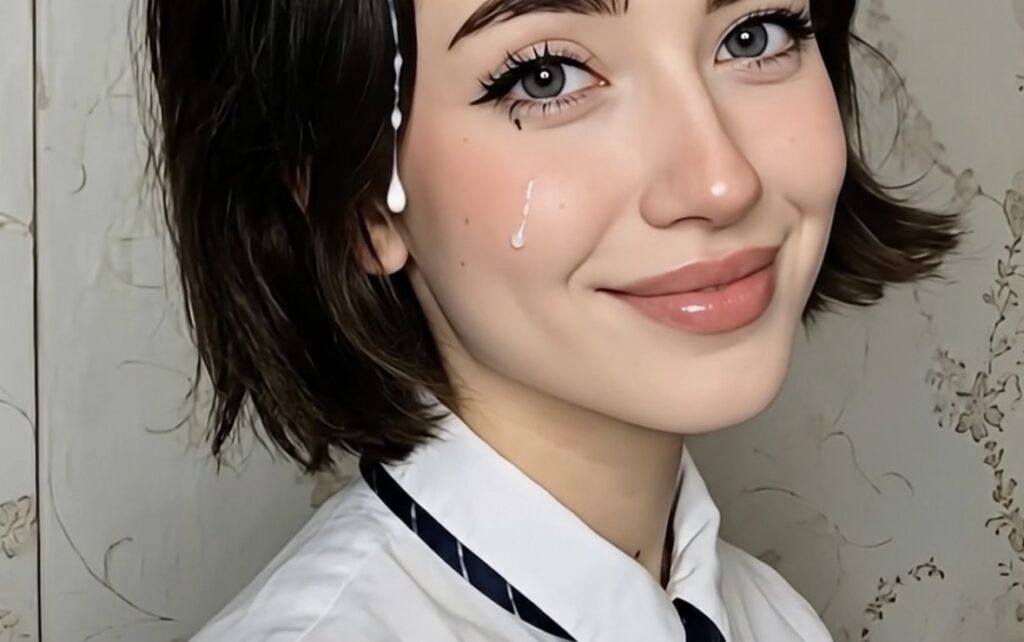
Within adult-oriented cosplay, tropes historically used to degrade or objectify women are being systematically reclaimed. A prime example is the subversion of the “facials” or “cumshot” aesthetic—visuals heavily associated with traditional, male-dominated pornography where the act is often framed as a mark of submission or humiliation.
When independent female cosplayers deliberately integrate these elements into their self-produced, highly stylized content, the power dynamic shifts entirely:
- Financial & Creative Agency: The creator is the director, producer, and primary financial beneficiary. She is not a prop in someone else’s studio; she is an entrepreneur capitalizing on her own artistic interpretation.
- De-stigmatization of Pleasure: By pairing high-effort, artistic costuming with explicit, taboo sexual expressions, these women bridge the gap between “high art” and “low culture.” They challenge the deep-seated societal notion that a woman cannot be simultaneously creative, intelligent, and overtly, radically sexual.
- Deconstruction of Shame: Purity culture dictates that a woman’s value is tied to her modesty. By presenting highly explicit, taboo themes entirely on their own terms, creators strip away the weapon of stigma, transforming a historical tool of objectification into a vehicle for bodily autonomy and financial liberation.
The Intersection of Art, Labor, and Economics
It is impossible to discuss the sexual liberation of women in cosplay without addressing the economic structures underlying the movement. For decades, women’s labor in creative fields has been undervalued, and their sexuality heavily policed. The modern cosplay economy directly challenges both limitations.
| Aspect of Production | Traditional Industry | Independent Cosplay Economy |
|---|---|---|
| Monetization | Corporate gatekeepers profit off female likeness. | Direct-to-consumer platforms ensure creators retain up to 80-90% of revenue. |
| Creative Direction | Male directors and executives dictate the boundaries of sensuality. | The cosplayer decides the concept, lighting, costume design, and level of exposure. |
| Body Standards | Rigid, exclusionary industry standards (size, race, age). | Highly diverse, body-positive community celebrating all forms of expression. |
| By treating their bodies and their costumes as canvas and capital, cosplay women have built a self-sustaining ecosystem. They are artisans, wig-stylists, makeup artists, lighting technicians, and marketing executives rolled into one. This financial self-reliance grants them the ultimate leverage: the power to ignore societal demands for respectability. When a woman is financially independent through her own self-directed creative labor, the patriarchal gaze loses its ability to penalize her for stepping outside prescribed gender roles. |
Conclusion: The Costume is Just the Beginning
Ultimately, the ways in which women utilize cosplay to explore sexual liberation are as varied as the characters they portray. Whether through the empowering psychological shift of character magic, the celebration of queer intimacy in girl-on-girl shoots, the structured authority of domination aesthetics, or the radical financial independence found in adult content creation, the message remains clear: women claim absolute ownership over their bodies, their desires, and their art.
By occupying spaces that cross the boundaries of fantasy, reality, art, and eroticism, cosplay women are doing far more than playing a part. They are actively rewriting the rules of engagement, proving that true liberation isn’t about conforming to a new set of rules, but about having the absolute freedom to create your own.
Leave a Reply